
Oystercatchers / tōrea pango & tōrea
These birds, both visually and vocally, are one of the more distinctive of our harbour's birdlife. Both the variable oystercatcher (tōrea pango) and the more common pied oystercatcher (tōrea) can be seen on our beaches, harbour and estuarine areas.

In earlier years the variable oystercatcher was known as the North Island Pied Oystercatcher (NIPO) and the South Island species as the SIPO. Confusingly however, both species live and breed in both the North and South Islands. By far the great majority of Pied oystercatchers live and breed in the South Island (total NZ population about 90,000) and roughly equal numbers of Variable oystercatchers live and breed in the North and South Islands (about 3,000 in each).
Due to hunting, both species were in serious decline by the early 1900's. They have increased significantly since they were protected in 1940 and are no longer considered threatened. Their Conservation Status is protected endemic.

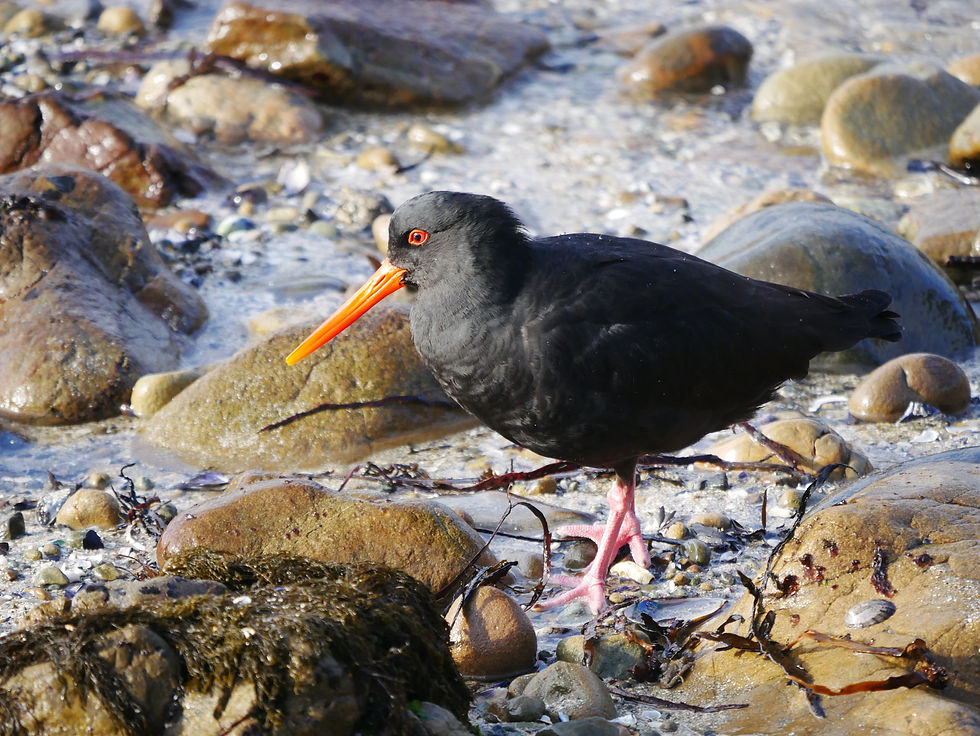
The variable oystercatcher is the species found living year round on our Whangamatā beaches and harbour areas. Its plumage is mostly entirely black but some individuals can have varying amounts of white feathering on their underparts and lower back. They are a bit bigger and more heavy than their pied cousins. Both species distinctive red bill and orange-red eyes are standout features.
At winter time most of the local birds, numbering about 80, tend to flock together at their favoured high-tide roosting sites. They are joined at these sites by numbers of their pied cousins, sometimes exceeding 100 individuals, that have migrated here to escape the colder southern winter. Although both species do not seem to mind roosting closely together, they do tend to cluster amongst their own. The majority of local birds flock during the winter months, but some paired birds remain on their natal territories year round.
Established pairs remain together from year to year. Each September with the commencement of the breeding season, paired birds, old and new, will return to their natal areas and either relaim their former nesting territories or form new ones close by. Their nests are similar to the NZ dotterels, being simple scrapes in the beach sands or gravels, just above spring-tide and wave surge reach. Usually 3-5 eggs are laid at intervals of 1 every 2 days.
Both sexes incubate, with the female usually taking the daytime shifts while the male defends their territory from predators and other intruders. Such duties can involve distraction activities such as broken-wing displays in their attempts to lure potential predators away. A more aerial approach is used by some, with repeated swooping dives accompanied by loud alarm calls that can be quite scary to threatening predators as well as to unsuspecting human intruders.

On hatching, the downy chicks stay in the nest for 1-2 days and on leaving are fed by both parents for the next 3 weeks while learning to fossick for their own needs. The chicks fledge at around 40-50 days old. They remain close to their territories for the next couple of months before dispersing to join others at their winter flocking sites.
Oystercatchers diet is mainly shellfish such as tuatua, pipi, muscles and cockles, worms, crabs, small fish and invertebrates. They open bivalve shellfish by stabbing and twisting their powerful bill between the two parts of the shell to open and expose the sought-after fleshy contents.
— John Adams. Whangamatā Harbour Care.


