
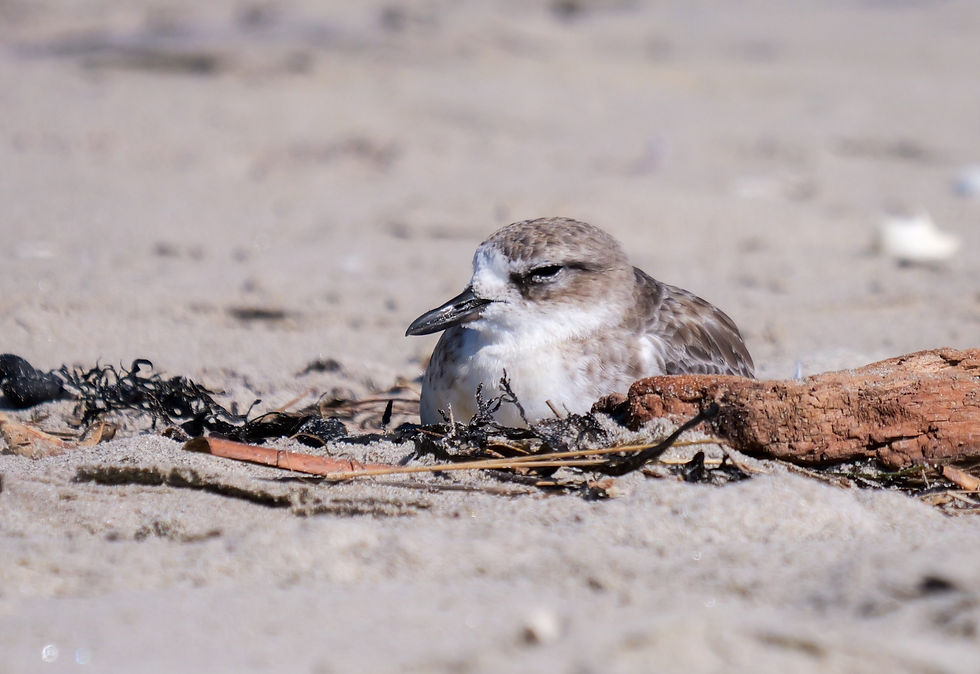
Northern New Zealand dotterel / Tūturiwhatu
This Northern New Zealand dotterel was tettering on the edge of extinction up until their plight was recognised in the late 1980's and conservation action initiated. At that time their population was restricted to beaches in Northland, Auckland, Waikato and the Bay of Plenty. They numbered around 800 birds and were rapidly declining.

By 2011, due to the introduction of predator controls and nest protection measures, they had increased to around 2500. They have now recolonised former beach habitats as far south as the Wairarapa on the East Coast, including a number of off-shore islands and Taranaki in the West. Their Conservation Status as determined by the Department of Conservation is At Risk – Relict, a vulnerable endemic species.
The Whangamatā population of breeding birds currently numbers around 18 pairs. During the winter months large groups of dotterel totalling around 115 birds, gather at various Whangamatā harbour, estuarine and beach sites. Many of these come here from neighbouring beaches. They flock together for mutual protection, to feed, rest and recover from their breeding season exertions. It is also the time when they moult and grow new feathers, and for some it is the time to socialise and establish new partnerships.
In early Spring each year at the commencement of the new breeding season the birds will have changed into their breeding plumage (pale to rich orange-buff breast and underparts) and paired up, usually with their mate from the previous season. They then return back to their former nesting territories.

Juvenile birds do not pair and nest until they are at least 2 years old. Banding studies have shown these birds to be highly loyal to their partners and their breeding sites. Both the male and female share the incubation duties with a clutch size of 3 eggs being the norm. Hatching occurs after about 29 days of incubation.
Their nest is a simple shallow scraped bowl on open sandy foredune sites, usually above the reach of high-tide wave surges and on the seaward side of the more densely vegetated higher dunes. These small, trusting and endearing birds are very protective of their nests. They will establish territories around them which they defend whenever they are approached by other birds, people, dogs and any native or introduced predators. They do this by first trying to attract the intruders away by putting on broken wing displays or charging at them and aggressively making loud distress calls.
Unfortunately absence from their nests during such encounters often results in their eggs or chicks becoming cold and dying and their nests then abandoned. The birds will renest up to three times following such events. They generally lay only 2 eggs on their second and third attempts and experience a much higher chick and fledging mortality rate. This is due to the higher levels of human and dog disturbances that occur as the busier summer holiday period progresses.
The dotterels main native predators are harrier hawks, black-backed and red-billed gulls, and their introduced predators include cats, dogs, stoats, ferrets, weasels, hedgehogs, and rats. Adult dotterels, their chicks and eggs are all targeted by most of these predators.
Sadly, in the past 3 breeding seasons, the numbers of pairs successfully raising chicks through to fledging (flying) age at Whangamata Beach has declined significantly, despite the best conservation efforts of our 'volunteer minders'.
Nest monitoring over the past 2 years has revealed only 13 eggs hatched successfully from 35 laid in the 2023/24 breeding season, with only 4 chicks surviving to flying stage. This last breeding season only 13 chicks hatched from the 51 eggs laid, and just 7 survived to the flying stage. It seems nest desertions due to human and dog disturbances are the main cause for most of these egg and chick losses.
The chicks leave their nests within 24 hours of hatching and fledge within 35-45 days. During this flightless period the chicks are very vulnerable to being chased and killed by dogs and other predators. Banding studies have shown birds surviving this initial period of high mortality can live and successfully breed for a good number of years. The oldest known bird so far reaching 32 years of age.

We currently have a small group of volunteers in Whangamatā and another in the Onemana/Opoutere areas who have taken on the responsibility of looking after their beach populations of NZ dotterels. Their activities include locating, signposting and fencing-off nesting sites, predator controls, and when necessary moving nests out of reach of rogue waves during extreme high-tide storm events. Frequent monitoring of these sites and some public education work is also carried out by them each nesting season.
Additionally Whangamatā Harbour Care Society, in support of their bird conservation efforts, have established an extensive array of predator traps and bait stations along the full length of the beach dunes and the harbour/estuary margins.
Although the survival of this species has been aided by the increased predator controls and nest protection measures now in place throughout its range, its continued presence here in Whangamatā is now under very real threat. This is undoubtedly due to the massive increase in the numbers of people utilising our beach to exercise their dogs in recent years. The current dog by-laws and a lack of any meaningful law enforcement effort by the authorities (DoC and TCDC), are proving totally inadequate to prevent the imminent loss of this iconic species from our harbour, estuaries and beaches. More restrictive laws and enforcement measures are urgently required if this is to be prevented.
What can you do to assist the continued presence of these birds on our beaches:
When exercising your dogs on the beach during the breeding season, keep them under close control at all times and on leads whenever in the vicinity of nesting or roosting dotterels.
Try to avoid walking your dogs along the beach during high tide periods and keep away, as far as possible, from the base of the foredunes.
Familiarise yourselves with the current local dog by-laws, respect and follow them. If you observe other people breaking them, report their actions as soon as possible to the local TCDC dog ranger and the DoC.
When you and your children are walking, playing or just laying around sunbathing at the beach, do so at least 15-20m away from known nest sites, whether or not they have been fenced off. Avoid the temptation to seek a closer look at the nest as this inevitably results in the incubating bird being disturbed off the nest.
During non-breeding periods each year, from March through to August, large groups of dotterels and other shore and sea birds gather together on our harbour, estuaries and beaches to rest and recover from their feeding efforts. They generally crowd closely together during high tide periods and any disturbance of them should be avoided if at all possible.
For those people living close to beaches and the harbour perimeters, reduce the opportunity for your pet cats and dogs to roam freely from your properties. Numbers of nests, eggs and chicks are destroyed each year from such occurrences.
Add your voices to those seeking increased dog control by-laws and law enforcement on our beaches and the provision of alternative dedicated dog exercise areas.
— John Adams, Whangamatā Harbour Care


